Thursday, March 29, 2012

Ice Cave

Me

Two weeks ago, my friend Alex and I decided to go snowshoeing at Castner Glacier. The goal was to spend some time outside in the wonderful spring weather and, if we could, find a way inside the glacier.

The parking area is just a wide bit of gravel shoulder where the Richardson Highway crosses Castner Creek. It's not marked, so you have to know this is the place to stop, and start walking upstream. Or, what would be upstream if the creek wasn't under 10 feet of snow and ice. I was here in summer and it was difficult going, you have to push for a bit through thick alders, which seems sketchy so you constantly yell and clap so you don't surprise any nearby bears. It's much easier this time of year as you can walk in the flat wide open of the creek itself. After about 1.5 miles of that, you come to a steep hill. Looking back from the top:

Looking back on the path

At this point, you're actually standing on Castner glacier: the hill is the terminus. This isn't entirely obvious in any season - even when there isn't a layer of snow, this part of the glacier is covered by a layer of rocks and even plants from upstream. But there are clues, such as this 20 foot ice wall sticking out of nowhere:

Ice wall

I was here last spring and found a cave entrance right at the base of the glacier's foot here, but now it is completely buried under the snow and I couldn't even tell where to start digging. So Alex and I decided to go further up-glacier to see what else we could find:

Snowy hill

Up to the top of the terminus, there was a nice packed trail for us to follow, but going further required us to break new trail as no one had been out there. We came to the top of the next hill and found a large collapsed cave entrance in the valley below us. The gaps between the ice blocks looked possibly big enough to squeeze through, but there was no easy way down there, so we followed a set of animal tracks up a ridge line to the next hill:

Animal tracks

There, we found another entrance, this time easy to get to:

Found an ice cave

Stepping inside:

Entrance to the ice cave

Stepping inside Looking back

This was a surprisingly large cavern - see the picture at the top of this post, which has me standing in it (did you miss that?), for scale. The cave continued back around a corner, and we could see a hint of light coming from back in the depths somewhere: Probably the other, collapsed entrance we saw earlier. Alex walked a bit down the corridor with a flash and I took a picture of the entrance lit by natural light and the passage lit by flash:

Inside a glacier

It was starting to get late out, and we had a ~3 mile slog through snow to get back to the car (finding a new route rather than going back over the top where we came from). So, time to go:

Time to leave

Back outside, the Sun was already set in our little valley, though it still lit the mountains nearby:

So long, ice hole.

There was a bright aurora in the sky for the entire drive home.

Monday, March 26, 2012

Worlds: Mars, Saturn

It's time to finish off the March tour of other worlds you can see with just your eyeballs. Last time was Venus and Jupiter. This time it's Mars and Saturn. Together with Mercury, those are the five 'wandering stars' known to the ancient world.

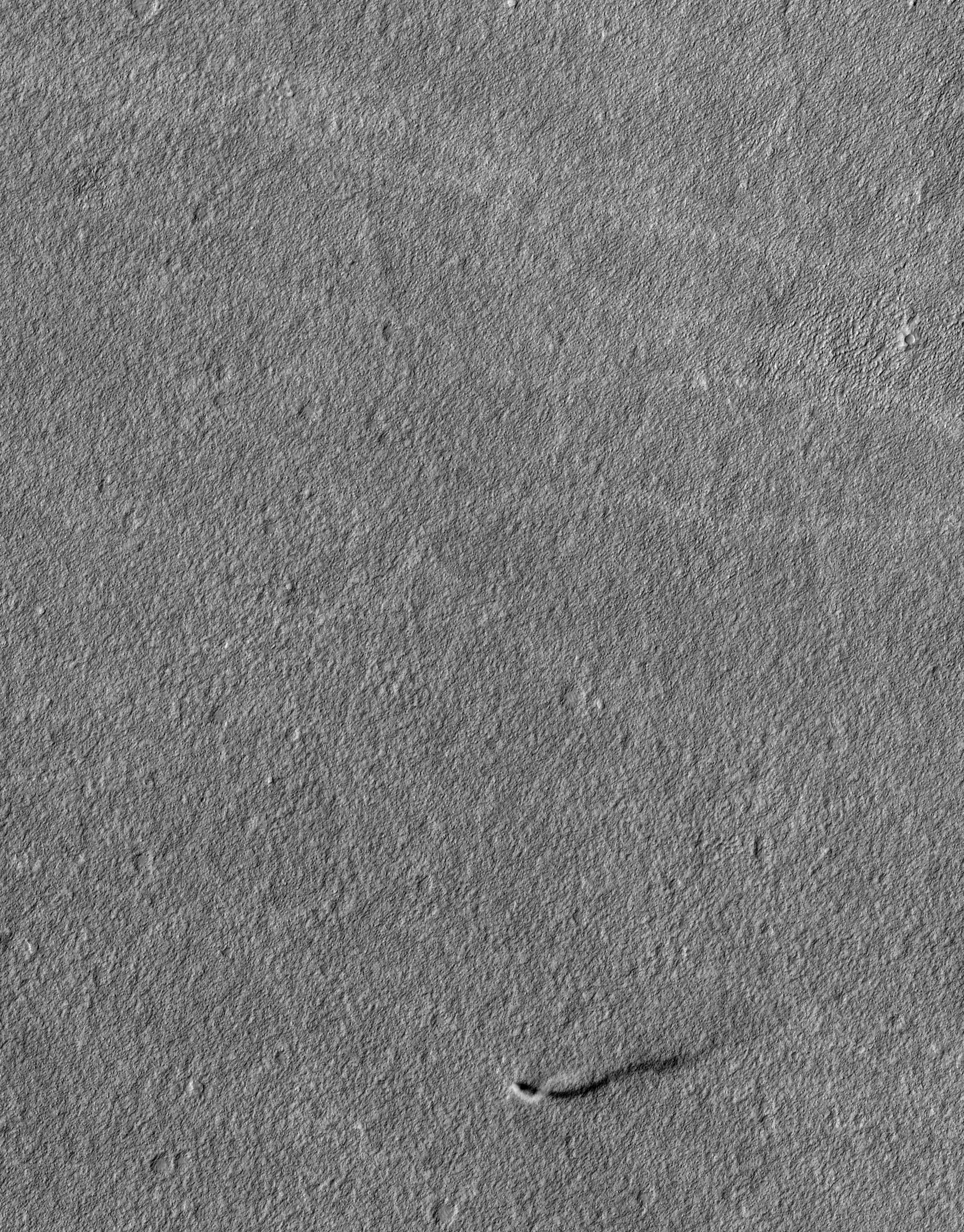
Mars first. It's visible basically all night right now, and you can find it with a sky map. Perhaps the easiest thing to do is look outside at midnight, when Mars will be pretty much due south. Mars will be conspicuous as one of the brightest 'stars' in the south, with a distinctive reddish color - Mars is named for the Roman god of war. The red color is due to a dusty surface, and though Mars is dry and cold today, large amounts of liquid water may have once existed on its surface. It has weather, too - this picture of 'tornadoes on Mars' recently made the rounds on the internet:


Huge source.

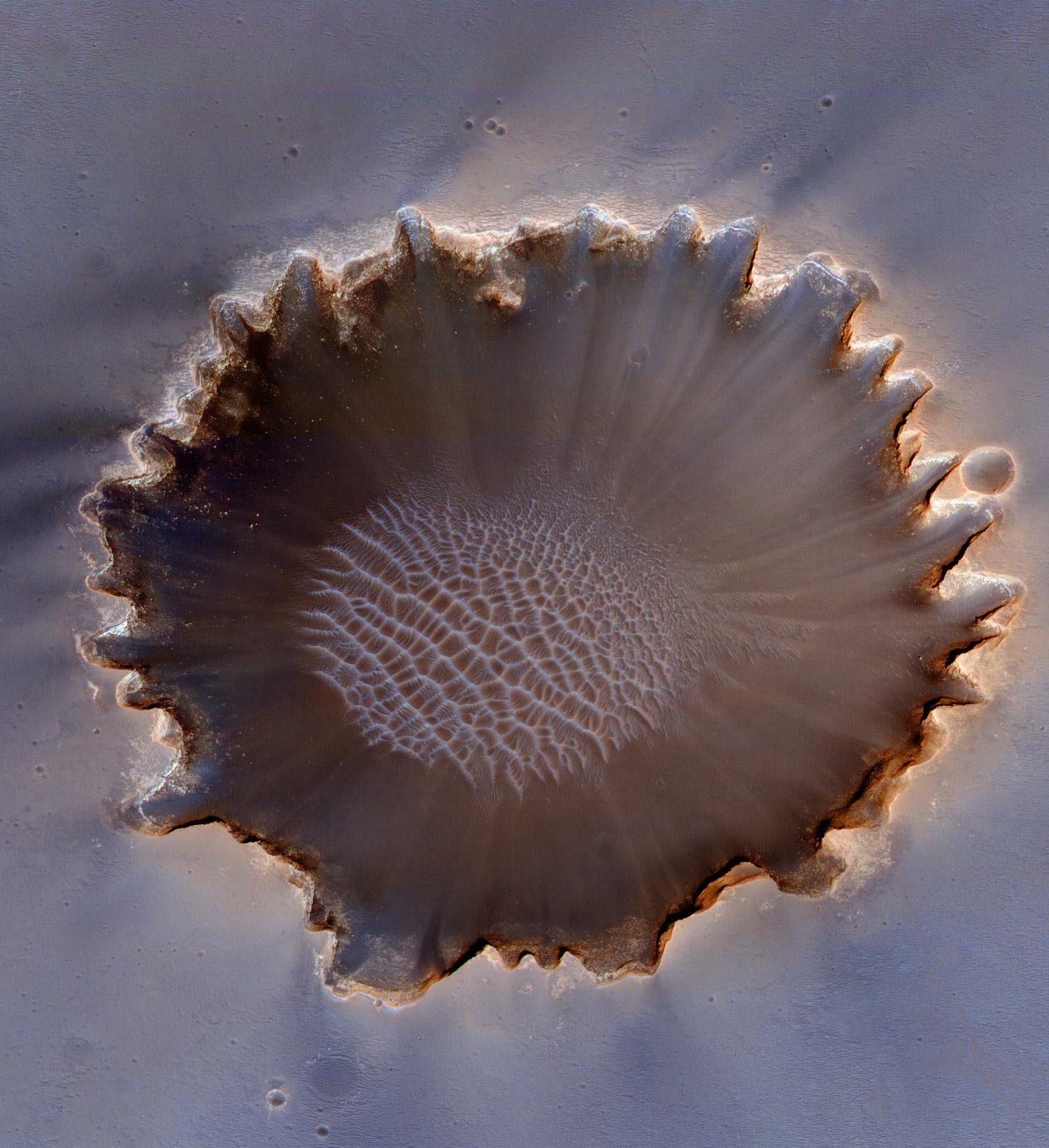
That was taken by the University of Arizona's HiRISE imager in orbit over Mars. It produces some really incredible images, like this impact crater:


Source.
Huge source.

Or this one:


Source.
Huge source.

Or these sand dunes:


Source.
Huge source.

Hint: The images above have been massively downsized to display properly here, HiRISE is a very high resolution imager, click the 'source' link below any of the above pictures for a big version, or the 'huge source' for a ridiculously large version you can zoom in on. It's worth it.

HiRISE has an image gallery of over 21,000 images like these, you can find it here. If you have your red-cyan 3D glasses*, you can find 3D images of Mars from orbit (HiRISE) here, and from the ground (Spirit and Opportunity rovers) here and here.

*You don't have red-cyan glasses? I told you, they're free.

On to Saturn:


Source.

You can find Saturn just east of Mars, right next to the bright star Spica. Here's a screenshot from Stellarium (you should download Stellarium if you like astronomy, it's free) to show how to find Saturn. Click for bigger:


Saturn's most obvious feature is those lovely rings, made primarily of dust. If you have a very nice pair of binoculars (you need about 25x magnification) and good eyes, you may be able to make them out, but most likely you'll need a small telescope. The good news is it doesn't need to be anything fancy, just about any small telescope will do. It's one of the most surreal things you can see in the night sky. I highly recommend it, A++, would look at again.


Source.

That's the Moon in the foreground with Saturn peeking out behind. That's about what you can expect Saturn to look like through a typical consumer telescope. If you were in a space ship, you could get a much closer view, like this one from Cassini:


Source.

Taken with the Sun hidden behind Saturn, so the planet is seen in silhouette and the rings are lit up by the sunlight passing through. Notice the bright dot just above and to the left of the bright inner rings - that's Earth.

And because we're all about auroras here, this is a shot of an aurora on Saturn:


Source.

And that wraps up the tour of the naked eye worlds. Except... don't forget the Moon! It's so obvious it's easy to take for granted, but even with a basic pair of binoculars, it's really something else:


Huge source.

Same deal as above, click the 'huge source' button and zoom in.

Wednesday, March 21, 2012

Look what I can do!


I balanced a broom. I got a text message on March 9 that said: "Something is making brooms balance by themselves. It has to be gravity or magnetic pull." Attached were these two pictures:


I've never heard of balancing brooms, and my first thought was 'What?'


So I googled it, and found several 'explanations', which were mostly variants of:

1. Gravitational pull due to either the equinox or an alignment of planets.
2. Something nondescript having to do with solar flare activity and/or the planet's magnetic field.

Both of those sound like nonsense. I mean, why brooms? Why not shovels? The fact that it's only brooms people are balancing tells me the explanation should have something to do with the broom rather than being external to the broom.

I must admit, it looks really wrong for the broom to be standing there all leaned over like that. Before we go on with the broom, let me propose something else to think about:


That's my reading light on its charging stand. It also leans quite a ways over past the base, but it doesn't seem out of the ordinary. Just looking at it, it's intuitive that all the weight is down in the base, and it doesn't seem weird for it to stand up like that. The physics is, if you have an object, no matter if some of it leans out quite a way, as long as the center of mass is still over the base, it stands up.

Back to the broom. The broom is really long, but all the weight is down by the brushy end, the rest is just a hollow plastic tube. We can figure out where the center of mass is by using this simple trick:


If you like people sliding their hands under a ruler set to piano music, here's a longer video. At the end, they unbalance the ruler by taping washers to one end, to show that fingers still meet at the center of mass, even when the center of mass is no longer at the middle.


So I did that, attached a tag where the center of mass is on my broom, and stood it up again:


And what do you know, the center of mass is completely over the base of the broom. So this is really no more strange or mysterious than my reading light standing up - the problem isn't that the broom stands up, the problem is that we think it shouldn't. It's like that thing they tell you in elementary school about how you can balance an egg standing up on the equinox. That's true, but only because you can balance an egg on any day of the year if you're careful enough. The equinox doesn't have anything to do with it.

For the broom, an additional effect comes from the fact that the broom is standing on bristles, which are basically little springs. For it to tip to either side, the bristles on that side have to compress, and their springiness helps push the broom back upright. It's a small push, but it probably accounts for people's reports that they can 'feel' some force trying to make the broom stand up. So not only does a broom balance, but it has a small restoring force to make it more stable.

I left the broom standing almost an hour ago; it's still there. It's just not that hard to balance a broom.

Remind me in a month, when we're away from the equinox and any kind of planetary alignment, and I'll do it again.

Monday, March 19, 2012

Winter Wrap Up Day

Tomorrow is the spring equinox, which is when day and night are equally long. After tomorrow, the day will be longer than the night (in the northern hemisphere).

This is because of the way the Earth is tilted with respect to the Sun: As the Earth goes around the Sun, it ends up with the north pole either tilted towards or away from the Sun. On the summer solstice, the north pole is tilted as far towards the Sun as it can be, and so the northern hemisphere gets pretty direct sunlight and the longest day of the year, which warms things up and we have summer. At the winter solstice, the north pole is tilted as far away from the Sun it can be, so we get indirect sunlight and the shorted day of the year; things cool off - winter. Note that the opposite is true in the southern hemisphere: The south pole is tilted away from the Sun while the north pole is tilted towards, so southern hemisphere winter is during northern hemisphere summer.

In between the solstices we have the equinoxes, when the Earth is tilted neither toward nor away from the Sun. The spring (vernal) equinox is when the days are getting longer and the fall (autumnal) equinox is when the days are getting shorter.


Source.

Tomorrow, on the spring equinox, the Sun will rise (more or less) due east and set due west, and it will be up (more or less) the same amount of time as it's down. I say more or less because there's atmospheric lensing effects, but it doesn't make much difference.

The seasons are defined like this:
Spring - day is longer than night, and days are getting longer
Summer - day is longer than night, but days are getting shorter
Autumn - night is longer than day, and nights are getting longer
Winter - night is longer than day, but nights are getting shorter

So autumn and winter are the dark nighttime seasons, and spring and summer are the bright daytime seasons. Each season is 3 months long. Works for me.

Ah, and since tomorrow is the first day of spring, that makes today Winter Wrap Up Day! Have a video: